PREMIUM PEARL
Implants of the Future1 Only with Procera dental restorations2 Nobel Biocare PEARL – always business-friendly • The world's strongest zirconium implant3 • It contains absolutely no metal parts!4 • It does not cause allergies later on. • Limited range of indications5 Nobel Biocare N1 – Indestructibly Durable • Pioneering titanium implant6 • With a revolutionary, single-use drill bit7 • The components' fit is unmatched8 • All of this leads to a more pathogen-free, hassle-free healing process and LONG-LASTING RESULTS. See points 1 and 2 in our previous newsletter; I’ll continue from there: 3. The disadvantage of zirconium implants—in addition to their less precise machinability—is their brittleness. The flexural strength of average dental zirconium is 1,000–1,200 MPa. That of higher-quality zirconium implants is 1,400–1,500 MPa, rarely reaching as high as 1,700. The Nobel Pearl’s flexural strength is unique: 2,000 MPa.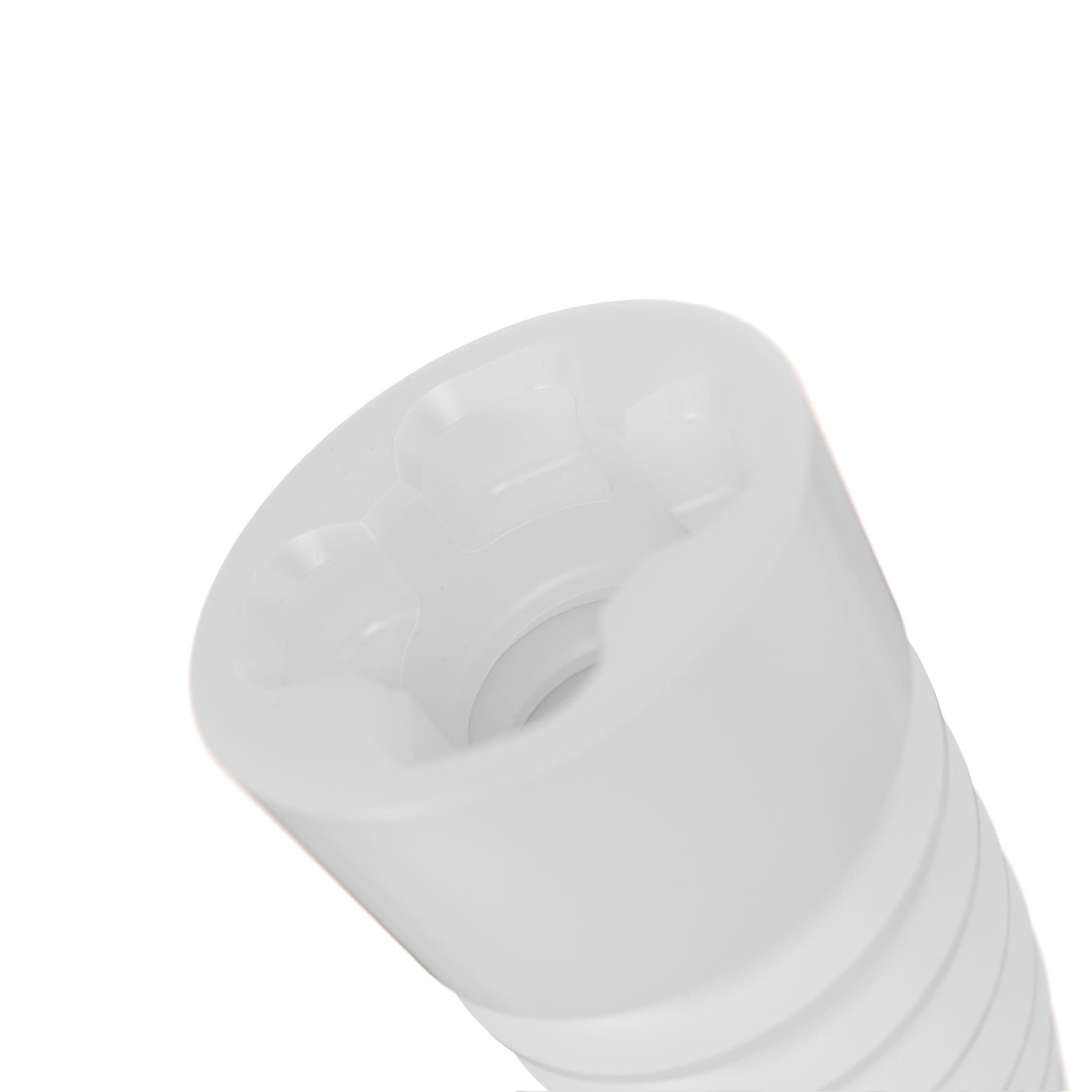 4. One-piece zirconium implants can be fabricated almost exclusively using “old-fashioned” methods, and often result in dental restorations that require significant compromises; therefore, we do not use them.
Two-piece zirconium implants of the 95% type contain some metal component, usually made of titanium (a screw securing the abutment; a titanium base; a titanium anti-rotation element). Saliva, acting as an electrolyte, seeps between the components, inevitably coming into contact with the metal and potentially forming a galvanic cell.
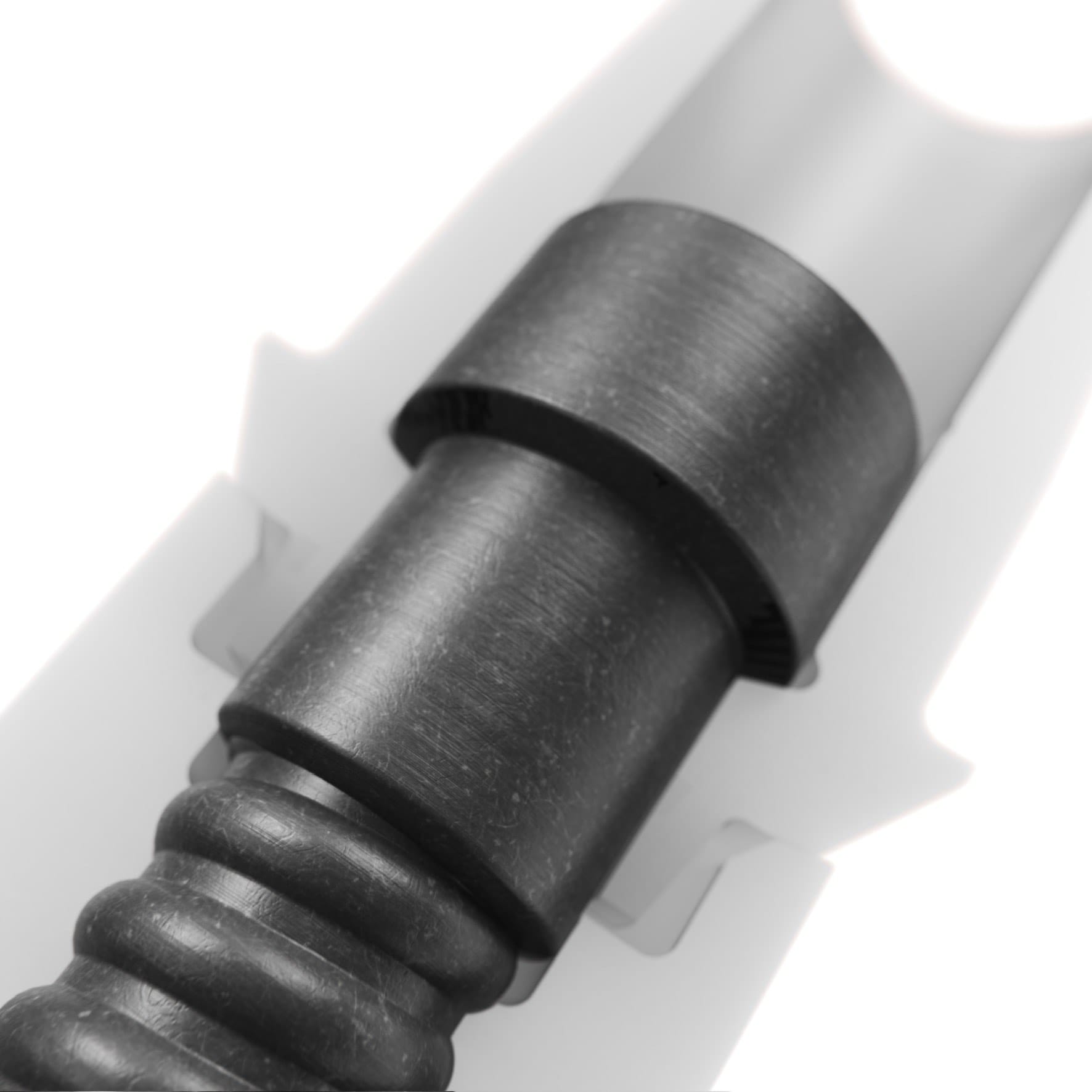
Nobel, in collaboration with automotive engineers, has developed a Kevlar screw for securing the abutment.
4. One-piece zirconium implants can be fabricated almost exclusively using “old-fashioned” methods, and often result in dental restorations that require significant compromises; therefore, we do not use them.
Two-piece zirconium implants of the 95% type contain some metal component, usually made of titanium (a screw securing the abutment; a titanium base; a titanium anti-rotation element). Saliva, acting as an electrolyte, seeps between the components, inevitably coming into contact with the metal and potentially forming a galvanic cell.
Nobel, in collaboration with automotive engineers, has developed a Kevlar screw for securing the abutment.
 5. It does not offer a solution for:
• immediate implantation following tooth extraction
• open (single-stage) dental implantation
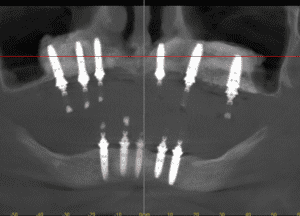
• All-on-4
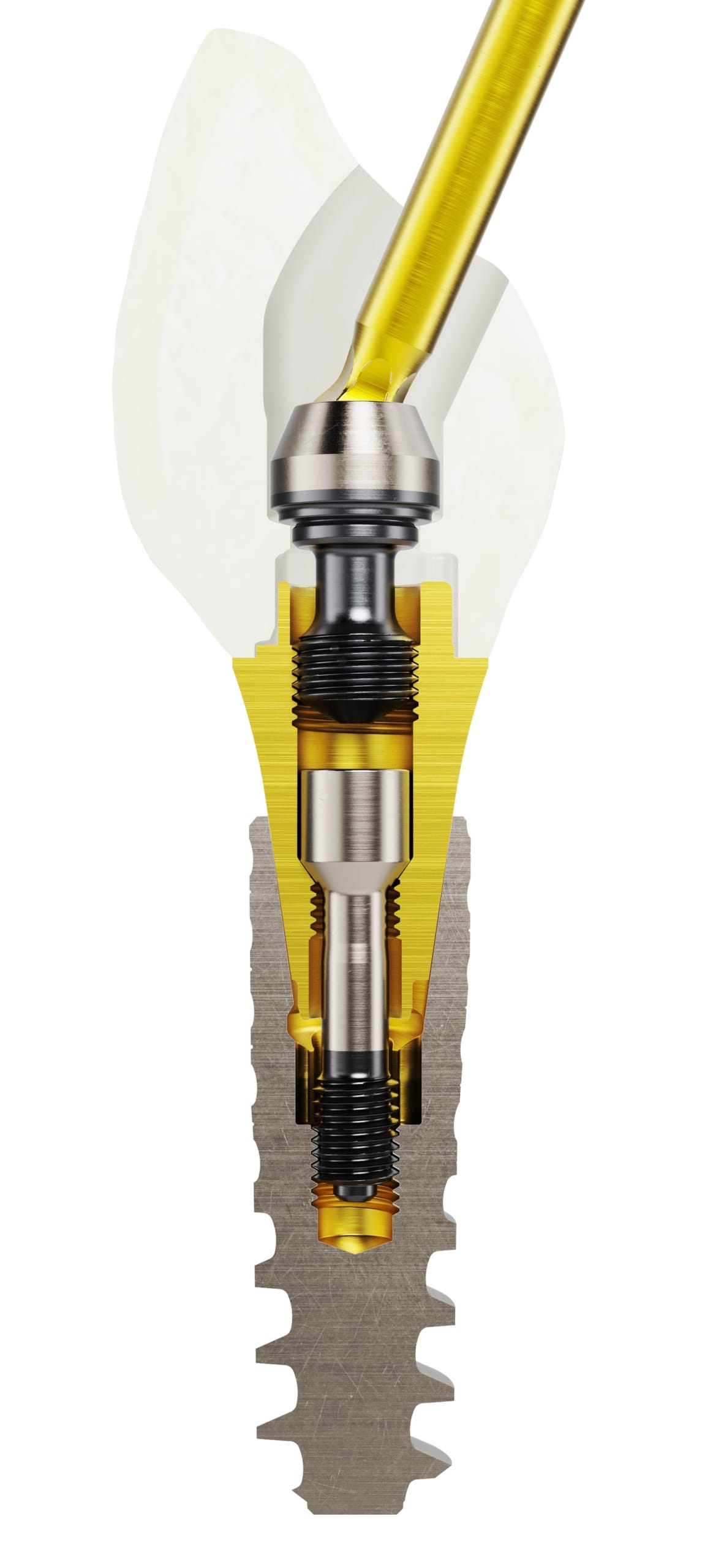
• screw-retained prostheses on angulated implants
• immediate CAD-CAM temporary screw-retained prostheses
6. The N1 titanium implant It has all the features of “conventional” apical implants. In addition—and this is what makes it revolutionary (and you actually have to be able to drill the bone for it!)—it has a trioval cross-section.
Why is this important?
The bone thickness on the outer side of the implant is one of the main factors determining its lifespan (see LINK); if it’s too thin, the bone resorbs, drastically reducing the implant’s lifespan—by as much as half.
The edges of the implant reinforce the implant body, allowing it to be a few tenths of a millimeter narrower.
5. It does not offer a solution for:
• immediate implantation following tooth extraction
• open (single-stage) dental implantation
• All-on-4
• screw-retained prostheses on angulated implants
• immediate CAD-CAM temporary screw-retained prostheses
6. The N1 titanium implant It has all the features of “conventional” apical implants. In addition—and this is what makes it revolutionary (and you actually have to be able to drill the bone for it!)—it has a trioval cross-section.
Why is this important?
The bone thickness on the outer side of the implant is one of the main factors determining its lifespan (see LINK); if it’s too thin, the bone resorbs, drastically reducing the implant’s lifespan—by as much as half.
The edges of the implant reinforce the implant body, allowing it to be a few tenths of a millimeter narrower.


These two factors result in an outer bone wall that is ~0.5 mm thicker—and therefore more durable—on the flapped side, which must always be positioned on the outside (see red line…light green shows a conventional 4.3-mm-diameter implant “projected” onto the equally strong 4.0-mm N1 implant)
7. The N1 drill does not actually “drill” or cut like conventional drills. Through its unique bone-expanding and “crushing” action, it creates a stronger implant-bone bond with greater healing potential. So why is it single-use? For one thing, a drill with very serrated cutting edges—which cannot be thoroughly cleaned—was invented specifically for this drilling method; it may not be possible to clean and sterilize it perfectly for a subsequent surgery. On the other hand, traditional, reusable drills wear down, drilling holes that are gradually slightly smaller. This causes tension and stress in the bone surrounding the implant, leading to bone resorption. Over the course of a few years, this can result in bone resorption of up to several millimeters. Using a new drill bit every time—though it increases costs—ensures a perfectly sized hole and, consequently, long-term durability.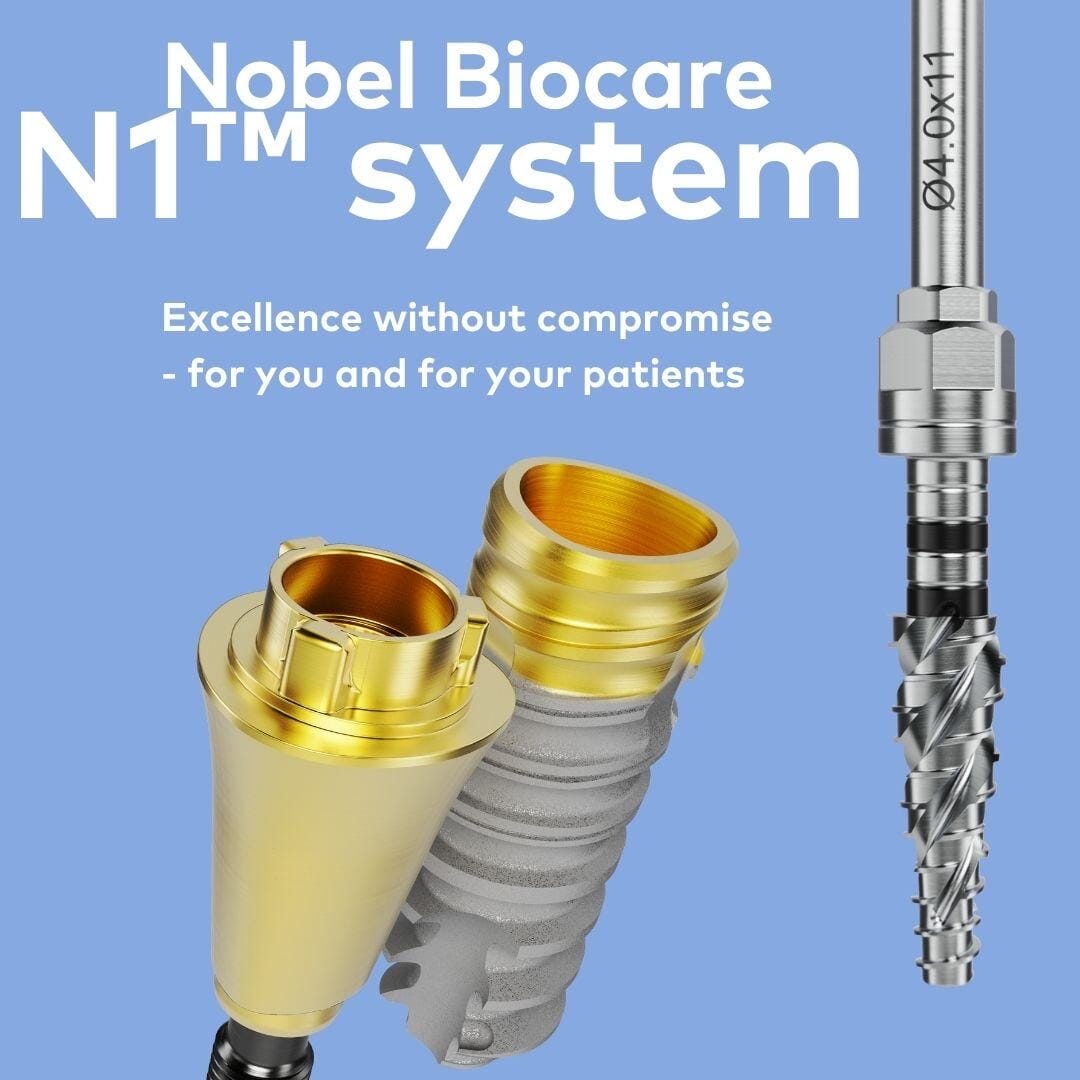 8. If—unlike anywhere else in the industry—the abutment fits into the implant with extreme precision, then:
• the gap is so small that bacteria cannot—or can barely—hide there. Thus, they cannot cause inflammation or, in the long term, bone resorption;
• there are no—or significantly fewer—micromovements of the abutment (approximately 1 million chewing movements per year!), which in the long term can lead to loosening of the dental prosthesis and bone resorption.
N1 dental restorations consist of extremely complex and precisely fitted units, on which the most advanced, “smartest” Procera restorations can be fabricated.
8. If—unlike anywhere else in the industry—the abutment fits into the implant with extreme precision, then:
• the gap is so small that bacteria cannot—or can barely—hide there. Thus, they cannot cause inflammation or, in the long term, bone resorption;
• there are no—or significantly fewer—micromovements of the abutment (approximately 1 million chewing movements per year!), which in the long term can lead to loosening of the dental prosthesis and bone resorption.
N1 dental restorations consist of extremely complex and precisely fitted units, on which the most advanced, “smartest” Procera restorations can be fabricated.